Our company strives to meet the needs of plants, production units, service centers, and all other business partners in the field of additive manufacturing, including 3D printing, whether it is about a prototype, a small series, or even an end product.
The composition of our capacity and technologies, as well as the variety of our raw materials, provides broad coverage from simple parts to industrial requirements.
We place great emphasis on ensuring that our company’s services stay ahead of competitors that satisfy widely available hobby-oriented printing needs, both in quality and in the range of raw materials.
Materials
Our company always strives to meet even the most specialized needs of our customers, and this is no different when it comes to the raw materials we use. In addition to simple and easy-to-print materials, we offer our partners a wide range of technical and industrial raw materials, so besides the well-known PLA, PETG, ABS/ASA materials, we also offer a huge selection from the following polymers: PA12, PA12-CF, PPS, PPS-CF, PC-ABS, PC-PBT, ULTEM, PEEK, PEEK-CF, TPU, etc...
Thanks to our machine park and according to the unique needs of our partners, we can work with almost any filament material available on the market.
Regarding our raw materials, we not only provide a wide selection based on composition, but it is also possible to select according to color palette, ESD, FDA, REACH certifications, or the UL94-v0 standard.
The material used in our SLS system is gray PA12, which has high heat and wear resistance, making it suitable for manufacturing functional parts and end products, while providing strong, waterproof results.
Our SLA system also offers a wide range of materials, from simple cost-effective solutions to flexible, industrial, extra-strong, heat-resistant, ceramic-filled, or PEEK-like resins. Whether for prototypes, functional parts, or series production, we can find the right material for your company, provided that the surface quality of resin printing meets the required criteria.
Our wide range of technologies and materials can be applied in numerous fields, and when selecting them, we always help our partners find the most suitable option based on their technical, mechanical, surface quality, and budget requirements.
Whether it is industrial production, electronic, mechanical, production line, or chemical industry components, or assembly, soldering, and casting jigs, our company finds the right material and ensures precise and accurate 3D printing.
Technologies
FDM (Fused Deposition Modelling):
The most widespread 3D printing technology, in which the printer melts plastic filament and, through a nozzle, deposits it onto the print bed with high precision, building up the required part layer by layer. A huge selection is available in terms of size, material composition, and color, ranging from simple materials to the most advanced high-performance polymers.
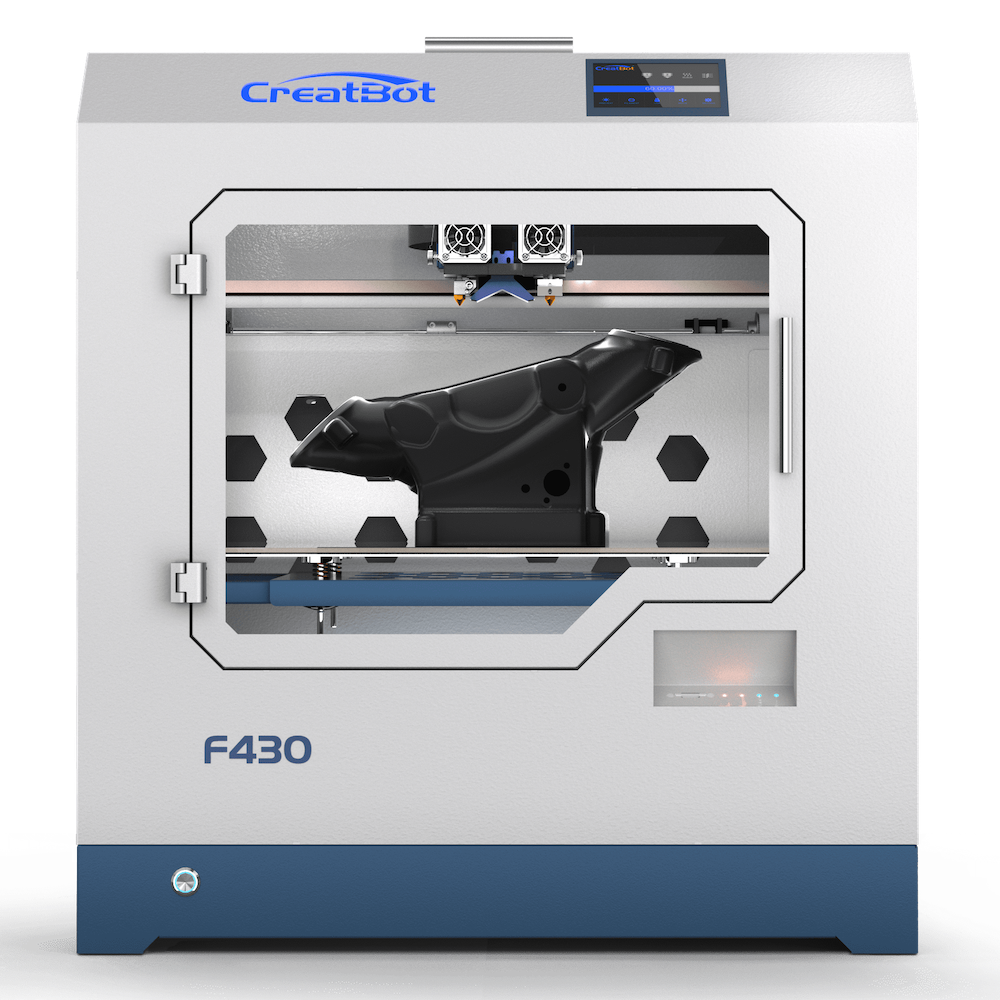
Our workshop houses more than 25 such machines, which have been selected in terms of size, processable materials, and printing capabilities to provide our partners with the most versatile production capacity possible.
The size of our machines allows the printing of parts up to 600 mm in one piece from conventional materials, and from special polymers (e.g. PEEK) up to 300–400 mm depending on the geometry.
Since precise manufacturing is a basic requirement in industrial fields, we not only have high capacity, but we also continuously develop and maintain our machine park, thus guaranteeing our partners the proper quality in every respect.
The final result of FDM printing depends significantly not only on the technical conditions, but also on the fine-tuning of numerous settings. Our company has outstanding professional experience in printing settings, so we provide a high level of service even in the case of special surfaces, tolerated dimensions, foreign and dissolvable support materials, fitting parts, or seemingly impossible geometries.
SLA (Stereolithography):
The highest-resolution 3D printing process, with which we produce highly detailed resin prints with an almost perfect surface finish. During the process, the object is also built up layer by layer from a special photopolymer that cures under UV light. Exposure is provided either by an ultra-high-resolution 4K–16K LED display or by a UV laser, which can achieve layer heights as low as 0.025 mm, thereby creating practically invisible layers.
We primarily use this technology for high-quality prototypes and small-series products where no compromise can be accepted in terms of visual quality.
Due to its range of materials, it can be used in many types of projects, from simple presentation models to biocompatible parts or components exposed to extreme heat loads.
In our workshop, 3 different SLA printers strive to meet those needs of our customers that exceed the visual or hardness requirements achievable with FDM printing.
In addition to proper settings and preparation, it is extremely important with these special materials that the removal of supports, washing off the remaining resin, drying, and post-processing of the print are also done professionally. Without these, although the result may appear satisfactory, its chemical and mechanical properties may fall far short of what the material would otherwise be capable of. We pay special attention to the proper execution of these tasks in every order.
SLS (Selective Laser Sintering):
SLS printing is an advanced additive manufacturing technology for parts subjected to mechanical loads, in which a precision laser fuses the shape of each layer in a polymer powder bed heated close to its melting point, thus building the object layer by layer so that it has uniform strength in all dimensions. Its characteristic material is PA12, along with a few other PA variants. This technology compensates for its narrower range of materials and colors with the strength, wear resistance, and outstanding mechanical properties of the manufactured part.
Another advantage of the manufacturing technology is that the support is provided by the plastic powder bed not melted by the laser, so neither its removal complicates post-processing nor do the traces of removal spoil the visual result.
The manufacturing technology is complemented by post-processing and surface treatment procedures so that, as a final result, every customer receives a full-value end product with a uniform texture and sealed pores, which can even be painted or otherwise surface-treated.
The maximum production size is 300 mm, but in every case we individually examine the manufacturability of the geometry.